How Long Does a Chimney Inspection Take?
Find out how long Level 1, 2, and 3 chimney inspections take, what slows the process down, and how to prepare for a faster, smoother visit.




Based on 500+ Reviews

Proudly American
Owned & Operated
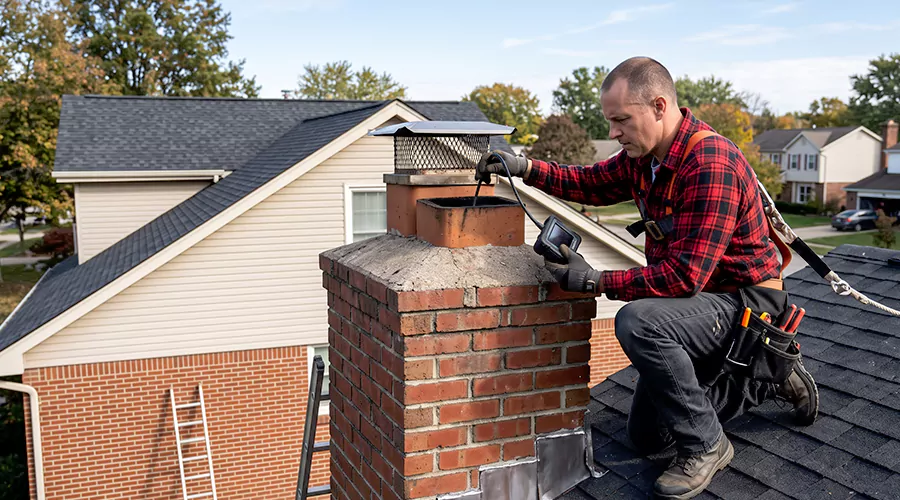
A chimney inspection usually takes between 30 minutes and 2 hours, depending on the type of inspection, chimney condition, accessibility, and whether additional testing or camera equipment is required. If the inspection reveals extensive damage to the fireplace structure, a fireplace rebuild may be recommended to restore its condition and safe operation.
A basic inspection of a regularly maintained chimney may be completed quickly, while a more detailed inspection involving a camera examination of the flue or investigation of hidden problems can take longer.
Understanding what affects inspection time can help homeowners know what to expect during the process.
Not every chimney inspection is the same. The time required depends on several factors, including:
A chimney with no visible problems may require less time than a system with damage, buildup, or suspected safety issues.
The three main inspection levels require different amounts of time.
| Inspection Type | Average Time |
|---|---|
| Level 1 inspection | 30 minutes to 1 hour |
| Level 2 inspection | 1 to 2 hours |
| Level 3 inspection | Several hours or longer |
The inspection level depends on why the chimney is being inspected and whether hidden areas need to be examined.
A Level 1 chimney inspection is usually the quickest type of inspection.
It commonly takes about:
30 minutes to 1 hour
This inspection is generally performed when:
During a Level 1 inspection, the inspector checks accessible areas, including:
The goal is to confirm that the chimney system appears suitable for continued use.
A Level 2 inspection usually takes longer because it includes a more detailed evaluation, while a professional fireplace inspection can help identify issues affecting the fireplace and its related components.
The typical time is:
1 to 2 hours
A Level 2 inspection may include a camera examination of the chimney flue.
This allows the inspector to look for:
A Level 2 inspection is commonly recommended when:
The additional time comes from examining areas that cannot be properly evaluated during a basic inspection.
A Level 3 inspection is the most detailed type of chimney evaluation.
The inspection time varies significantly and may take:
Several hours or longer
This type of inspection may require access to concealed areas behind:
A Level 3 inspection is usually performed when serious concerns exist, such as:
Because additional access may be required, the process can take much longer than a standard inspection.
The inspection process generally includes several steps.
The inspector examines the fireplace area for:
The damper is checked to confirm it:
The flue is inspected for:
A camera may be used during more detailed inspections.
The outside structure is checked for:
After the inspection, findings may include:
The report time depends on how detailed the inspection findings are.
Several conditions can increase inspection time.
Homes with multiple fireplaces require additional inspection time because each system must be evaluated separately.
Inspection may take longer when:
If problems are discovered during the inspection, additional evaluation may be needed.
Examples include:
A camera inspection requires additional time because the inspector must carefully examine the inside of the flue.
The process includes:
Yes. Inspection and cleaning are separate services.
A chimney inspection may take less than an hour, while chimney cleaning can add additional time depending on:
A chimney with heavy creosote buildup or blockages may require more cleaning time.
Homeowners can help make the inspection process faster by preparing beforehand.
Before the inspection:
A clean and accessible work area allows the inspection to be completed more efficiently.
It is generally helpful for homeowners to be available during the inspection.
Being present allows you to:
The inspector may also need information about fireplace usage or previous problems.
Yes, but speed should not replace a proper evaluation.
A quick visual check may miss hidden problems inside the chimney.
A complete inspection should carefully evaluate important components, including:
The goal is to identify problems accurately, not simply complete the inspection as quickly as possible.
A chimney inspection usually takes between 30 minutes and 2 hours, depending on the inspection level, chimney condition, and whether additional evaluation is required.
A basic Level 1 inspection may take about 30 minutes to an hour, while a Level 2 inspection with camera evaluation commonly takes one to two hours. More detailed Level 3 inspections can take several hours because they involve investigating concealed areas.
The time required depends on the complexity of the chimney system and the condition of its components. A thorough inspection helps identify problems such as flue damage, blockages, leaks, and structural issues before they become larger concerns.
A basic chimney inspection usually takes about 30 minutes to one hour.
A Level 2 inspection generally takes about one to two hours because it often includes an internal camera examination.
Inspection time increases when the chimney is large, difficult to access, damaged, or requires additional evaluation.
No. Inspection evaluates the chimney condition, while cleaning removes soot, creosote, and debris.
Yes. Make sure the fireplace area is accessible and avoid using the fireplace shortly before the inspection.
Yes. Detailed inspections, especially those using cameras, can identify internal problems that are not visible from outside.
Find out how long Level 1, 2, and 3 chimney inspections take, what slows the process down, and how to prepare for a faster, smoother visit.
